When the Sky Held Its Breath: A First-Person Account from the Tarmac
I remember the air that day. It tasted of jet fuel and distant rain, a metallic tang that clung to the back of my throat as I stood by the fence, my camera a familiar weight in my hands. The sky over Los Angeles was its usual pale, sun-bleached blue, a canvas for the constant ballet of silver birds. I was there to capture grace, the poetry of ascent and descent. I never imagined I would become a witness to a moment where that poetry nearly fractured into tragedy, a moment where the very air seemed to freeze.
On that Friday, the rhythm of LAX was its familiar symphony. Then, a new note entered the chorus: a sleek private jet, Key Lime Air Flight 563, gliding smoothly after its arrival from Spokane. Aboard were the celebrated athletes of the Gonzaga University men's basketball team, likely buzzing with the post-flight languor of a journey completed. Parallel to its path, a Delta Air Lines Boeing 747, a majestic jumbo jet, was a titan gathering its strength at the threshold of the runway, its engines building to a thunderous crescendo for takeoff. I framed them both in my viewfinder, an interesting contrast of scale against the vast concrete expanse.
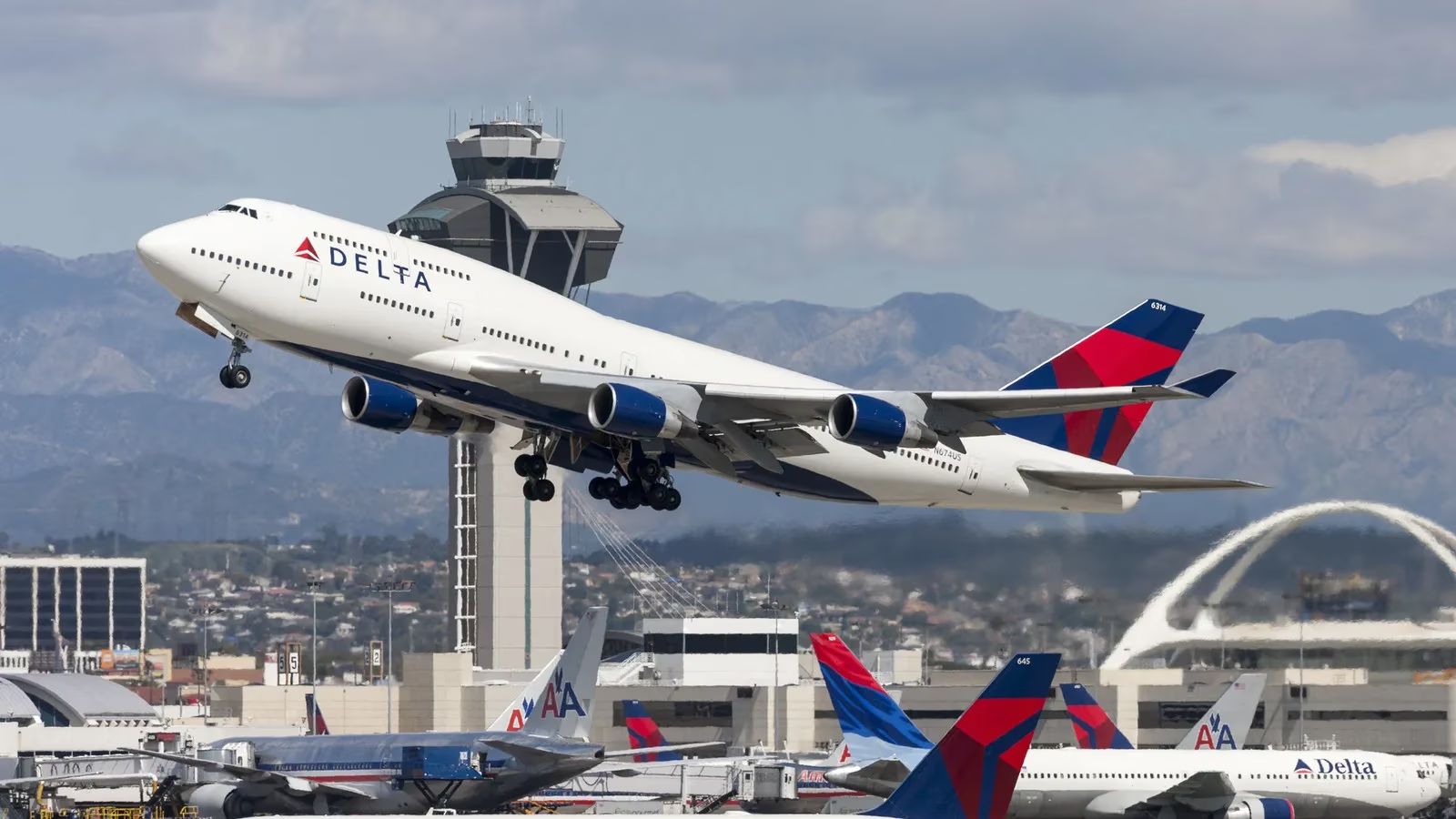
What happened next unfolded with a chilling, slow-motion clarity. The private jet, instead of holding its position behind the solid, painted demarcation on the tarmac—the hold line, a sacred boundary in aviation—began to creep forward. It was a subtle movement, but to a trained eye, it was as jarring as a dancer stepping out of formation. The Delta jet, Flight 471, was already in its committed dance with gravity, its massive wheels leaving the earth. My heart hammered against my ribs. The space between them, a gap meant for safety, was evaporating. I heard my own breath catch, a sharp intake of the fuel-scented air.
Then, cutting through the low rumble, a voice erupted from the radio chatter I monitor—a voice laced with a urgency so raw it was almost tangible. The air traffic controller, the unseen conductor of this skyward orchestra, shouted the command that sliced through the tension: “Key Lime, stop, stop, stop!” The words weren't just an instruction; they were a lifeline thrown across the radio waves, a desperate incantation to halt fate. And it worked. The private jet shuddered to a stop. I later learned from the official report it had not, by a margin that feels both vast and infinitesimal, crossed the hold line. The Delta bird continued its climb, soaring into the azure, blissfully unaware of the shadow it had just escaped.
In the sudden, ringing silence that followed the controller's shouts and the receding roar of the 747, all I could do was exhale a stunned, “Woo! Woo! Wow.” It was a raw, unfiltered sound that escaped me, captured forever on the video I was filming. That moment was a collision averted, a disaster deferred. The proximity of it all left me trembling. The investigation by the FAA would soon begin, with both airlines pledging full cooperation, but in that instant, all that existed was the echo of a near-miss and the profound gratitude for the vigilance of that controller.
The incident sent a cold shiver down my spine, especially given the context of that harrowing week in global aviation. Just days prior, the world had mourned the devastating loss of a Jeju Air flight in South Korea, a tragedy stemming from a suspected bird strike and a failed landing gear that ended in fire and immense loss of life. The fragility of these routines, the thin line between normalcy and catastrophe, felt overwhelmingly palpable. Our skies, for all their perceived openness, are corridors of strict order and immense kinetic energy.
| Element | Role in the Incident | Emotional Weight |
|---|---|---|
| Hold Line | The physical and regulatory boundary on the tarmac. | A literal line between safety and peril. |
| ATC Controller | The vigilant human voice issuing the "stop" command. | The hero in the tower, the keeper of order. |
| Private Jet (Key Lime 563) | The aircraft that began an unauthorized movement. | A vessel of potential error, carrying precious lives. |
| Delta 747 (Flight 471) | The departing commercial airliner on its takeoff roll. | An unstoppable force, vulnerable in a critical phase. |
Reflecting from the vantage point of 2026, the lessons of that day feel ever more critical. Aviation safety is a living, breathing entity, maintained not just by technology but by unwavering human attention. The Gonzaga University team disembarked safely, their athletic pursuits continuing unbowed, likely unaware of the precise contours of the danger they had skirted. For me, the observer with a camera, the experience was transformative.
I no longer see just planes on a tarmac. I see intersecting stories, weighted silences, and the profound responsibility borne by every individual in the aviation ecosystem. That near-collision was a stark poem written in jet wash and radio static, a verse about how close we can sometimes sail to the edge without falling over. It was a reminder that sometimes, the most beautiful sight in aviation is not a perfect takeoff, but the uneventful, safe return to the gate, and the collective, unspoken sigh of relief when the sky's delicate balance is preserved. The memory of that halted private jet and the controller's urgent cry will forever be etched in my mind, a humble testament to the fact that in the realm of flight, vigilance is the most beautiful language of all. ✈️
Every procedure followed, every command heeded, is a silent prayer for safe passage through the boundless blue.